History
RHEWA - over 100 years of industrial weighing experience
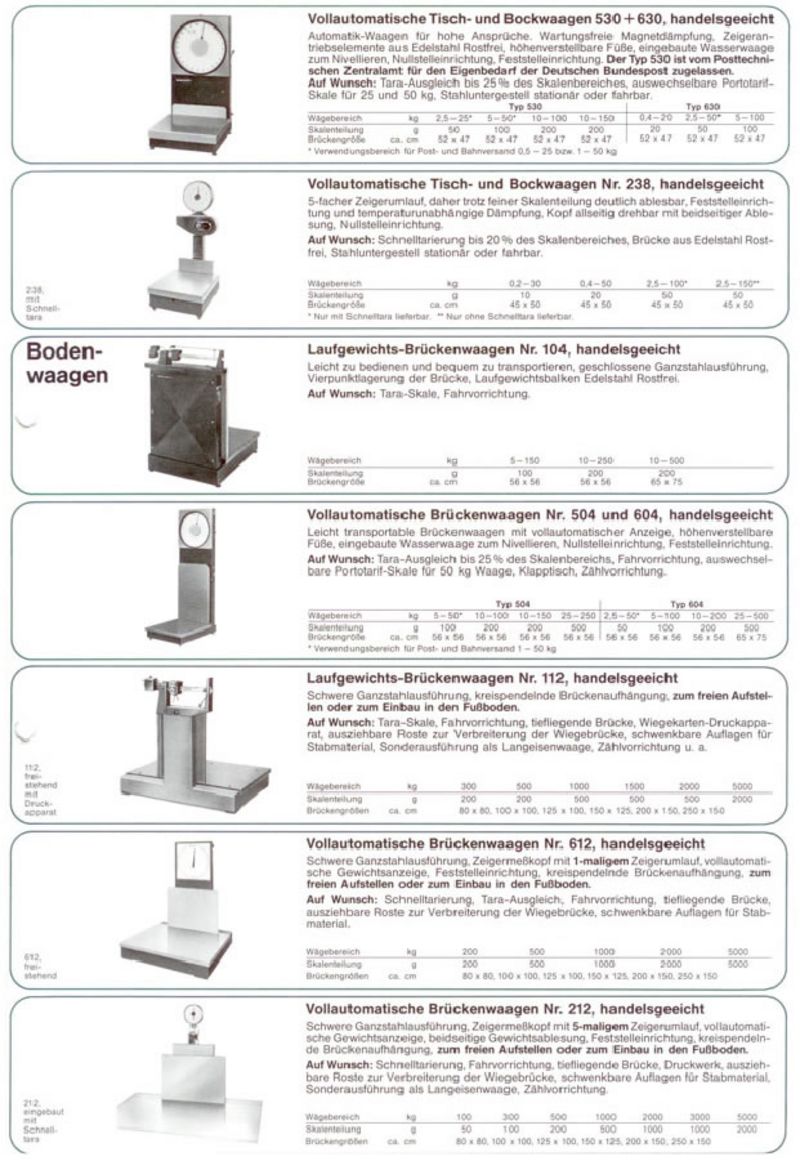
In 1856, Carl-August Freudewald establishes Barmer Waagenfabrik, a factory for the manual production of decimal and Béranger balances. Around 1870, his sons August, Ernst and Emil join the company. When the factory building in Barmen is destroyed by fire, a new one is built at Mettmann in 1899.
At the same time, the company is renamed Barmer Waagenfabrik C.A. Freudewald. It specialises in the series production of Roberval and Béranger balances. Cold working and machine punching take the place of forged components.
![[Translate to English:] C.A. Freudewald](/fileadmin/_processed_/9/e/csm_CAFreudewald_94a65e309d.jpg "[Translate to English:] C.A. Freudewald")
1904 In 1904 August Freudewald founded RHEWA (RHEinische WAagenfabrik) as a branch of Barmer Waagenfabrik
The main focus of production is on the serial production of wooden decimal scales. To make use of the resulting punching waste, the program is expanded to include Béranger table scales. Company CEO Walter Freudewald later recalls: "...instead of the open designs at that time, RHEWA table scales were delivered with an attractive sheet metal casing."
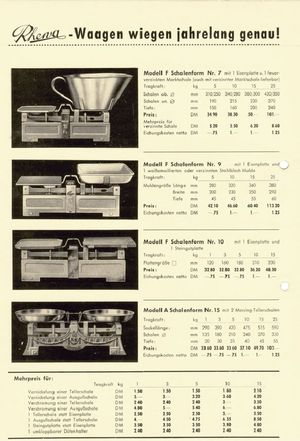
1912 After the founding of RHEWA-WAAGENFABRIK, Ernst and Emil Freudewald continue to independently operate the Barmer Waagenfabrik
In 1912, they sell the company to the hardware wholesaler Paul Herzog. Under the name Herzog-Waagenfabrik, formerly Barmer Waagenfabrik C.A. Freudewald, it exists until 1962.
![[Translate to English:] August Freudewald](/fileadmin/_processed_/3/b/csm_August_Freudewald_65d93fcb91.jpg "[Translate to English:] August Freudewald")
1913 In 1913, A. Freudewald brings his son August into the company, but he falls in World War I
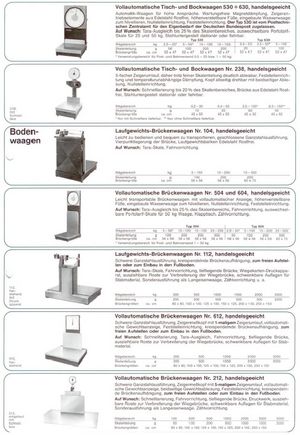
Until the entry of his younger son Walter into the company (1921), the senior boss once again manages the business alone. In 1914, Plant II is acquired. In the previously independent small-scale operation, running weight, coal, and livestock scales are manufactured.
![[Translate to English:] Walter Freudewald](/fileadmin/_processed_/8/1/csm_Walter_Freudewald_938285ba9f.jpg "[Translate to English:] Walter Freudewald")
1934 In 1934, an expansion of the company takes place with the addition of a new warehouse and shipping building.
![[Translate to English:] Karl-August Freudewald](/fileadmin/_processed_/d/2/csm_Karl-August_Freudewald_46348aca44.jpg "[Translate to English:] Karl-August Freudewald")
1955 After the wounds of World War II began to heal, Karl-August Freudewald, the son of Walter Freudewald, joined the company in 1955 and started his career at RHEWA in purchasing. In 1957, he took over the leadership of the company.
1978 In 1978, the first electronic RHEWA indicator was introduced.

1985 The increasing share of electronic scales in the market was addressed in 1985 with the introduction of the first calibration-capable RHEWA indicator.
![[Translate to English:] Peter Freudewald](/fileadmin/_processed_/f/4/csm_Peter_Freudewald_de7f03ab95.jpg "[Translate to English:] Peter Freudewald")
2001 2001 Karl-August Freudewald hands over the management to his sons Peter and Leopold
Leopold leaves the company in 2004 and pursues a career in forestry.
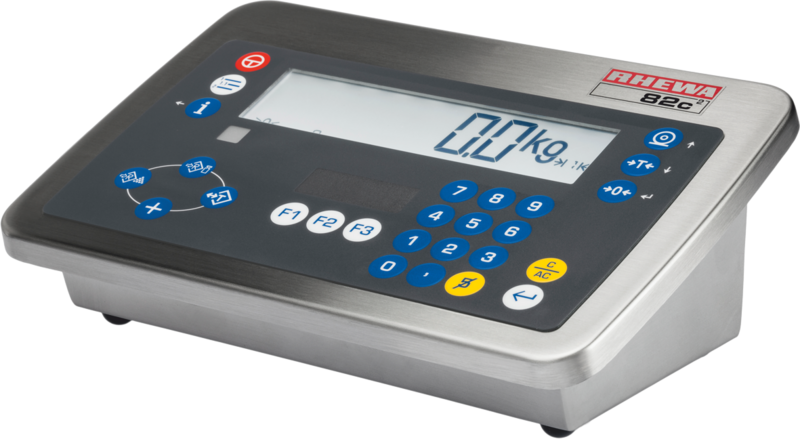
TODAY The original production of mechanical scales has been replaced by the development and production of state-of-the-art weighing electronics. Through consistent advancements, the use of high-tech in production, and years of experience, RHEWA ensures performance and quality. The company is market-oriented and focused on the future.
![[Translate to English:] C.A. Freudewald](/fileadmin/_processed_/9/e/csm_CAFreudewald_c7a40420a9.jpg "[Translate to English:] C.A. Freudewald")

![[Translate to English:] August Freudewald](/fileadmin/_processed_/3/b/csm_August_Freudewald_07a3d37394.jpg "[Translate to English:] August Freudewald")
![[Translate to English:] Walter Freudewald](/fileadmin/_processed_/8/1/csm_Walter_Freudewald_633ec4952d.jpg "[Translate to English:] Walter Freudewald")
![[Translate to English:] Karl-August Freudewald](/fileadmin/_processed_/d/2/csm_Karl-August_Freudewald_b1fac44fa5.jpg "[Translate to English:] Karl-August Freudewald")

![[Translate to English:] Peter Freudewald](/fileadmin/_processed_/f/4/csm_Peter_Freudewald_6824223323.jpg "[Translate to English:] Peter Freudewald")